

Cannabis Clues, Recipe
How to Make Water Soluble Cannabis Oil with Homegrown Cannabis Flower (With Photos!)
Are you on the hunt for a quick-acting alternative to traditional cannabis edibles? Water soluble cannabis oil might be your answer. This method allows for rapid absorption, typically kicking in within 15-20 minutes. The best part? You can whip it up at home using your homegrown cannabis flower.
Learn to Grow Better Weed
Download our free guide to growing amazing cannabis at home.
Click Here For More Info
Ingredients and Equipment Needed:
- Homegrown Cannabis Flower (3 grams of 15% THC strain)
- Coconut Oil (1 cup)
- Maltodextrin Powder (2/3 cup)
- Sunflower Lecithin Powder (Optional, 1 tablespoon)
- (Optional) If you already have RSO you can just mix that into any edible oil of your choice instead of making a batch of cannabis oil.
- Cheesecloth and strainer
- Pan for simmering and heat source
- Bowl, whisk, screen for refining
- Measuring equipment (spoons, cups, scale)
Part 1: Infusing Coconut Oil with Cannabis
To infuse coconut oil with cannabis and unlock its full potential, it’s essential to start with the process of decarboxylation. This crucial step transforms the THC-A in your cannabis—a non-intoxicating compound—into the psychoactive THC that delivers the effects many users seek.
Decarboxylation (if necessary):
If your cannabis is raw or has not been previously activated, you’ll need to decarboxylate it. Here’s how you do it:
- Preheat your oven to about 245 degrees Fahrenheit (118 degrees Celsius). This temperature is ideal as it activates THC without damaging it.
- Spread your ground cannabis out in a thin layer on a baking sheet. This ensures even heat exposure. If you don’t want you house to smell bad you can do this in a jar.
- Place the baking sheet in the oven and heat the cannabis for 45-60 minutes. This time range is sufficient to convert THC-A into THC without burning your cannabis.
- Remove from the oven and let it cool.
- Once your cannabis is decarboxylated, it’s ready to be infused into the coconut oil.
Simmering Decarbed Weed and Coconut Oil:
Now, follow these steps to combine the activated cannabis with coconut oil:
- Add water to your saucepan—enough to float the coconut oil when it’s added. The water helps keep the temperature from getting too hot. The water can be easily removed later. Alternatively you could use a double boiler.
- Heat the pan on low until the coconut oil melts and becomes liquid.
- Slowly stir in the decarboxylated cannabis into the melted coconut oil until it’s fully submerged.
- The oil doesn’t need to get too hot. Just warm enough to speed up the absorption of THC.
- Let the mixture simmer for about 30 minutes, stirring occasionally.
- After the simmering, set up your strainer over a bowl and line it with cheesecloth.
- Carefully pour the mixture through the lined strainer, capturing the oil in the bowl.
- Wring out the cannabis from the cheesecloth to extract every drop of oil.
- Discard the plant material and allow the oil to cool.
The coconut oil is now infused with cannabis and can be used as desired. Remember to store your infused coconut oil in a cool, dark place, and it’s ready for your next culinary adventure.
Block "68700" not found
Part 2: Making Water Soluble Cannabis Powder
Now that you’ve infused coconut oil with cannabis, let’s move to the next step: making it water soluble. This process will transform your oil into a versatile powder that can be mixed into a variety of foods and drinks for convenient consumption.
The real magic here comes from the maltodextrin and lecithin.
Maltodextrin is a food additive that is a white powder made from starch. It is used to convert your infused cannabis oil into a fine powder. When the oil is mixed with maltodextrin, it absorbs the oil and dries it out, creating a powdered form. This powder can blend more easily with water which is useful for mixing with various foods and drinks.
Lecithin is an emulsifier, which means it helps to mix substances that typically don’t combine well, like oil and water. When added to cannabis edibles or infusions, it helps distribute the THC or CBD more evenly, so you get a more consistent experience. Sunflower lecithin is often chosen for its potential to increase the effectiveness of the cannabinoids due to its natural phospholipids which enhance cellular absorption.
In the context of creating water-soluble cannabis powder, while lecithin is optional, it’s included to improve the overall distribution and interaction of cannabinoids with your body when consumed.
Combining Ingredients into a Powder:
- Begin by taking the infused coconut oil you made in Part 1. If it has solidified, warm it up gently until it turns into a liquid. Use low heat to avoid any degradation of the cannabinoids.
- Measure out your maltodextrin powder. The quantity will depend on how much oil you’re starting with, but a general guideline is to use a 2:1 ratio of maltodextrin to oil.
- In a mixing bowl, add your melted coconut oil. If you’re including sunflower lecithin, which may improve the bioavailability of the cannabinoids, add it to the oil now. Sunflower lecithin should be used in moderation; a tablespoon is sufficient for most batches.
- Add the maltodextrin powder to the bowl with your oil (and lecithin).
- With a whisk or fork, mix the oil and maltodextrin vigorously. Your goal is a homogeneous mixture with no clumps. Stir constantly until the oil is fully absorbed and the mixture has a consistent, powdery texture.
- Pour the mixture onto a fine mesh screen or sieve placed over a clean bowl or tray to achieve uniformity.
- Gently shake the screen or press the mixture through with a spatula. This step removes any lumps, ensuring your powder is of a fine and uniform consistency.
Your cannabis powder is now ready to use. Be sure to store it in a dry, airtight container to keep moisture out and maintain its powdery form. You can then easily mix it into your beverages, sprinkle it on your meals, or use it to create edibles with precise dosing. Enjoy your homemade water soluble cannabis powder responsibly!
Block "68702" not found
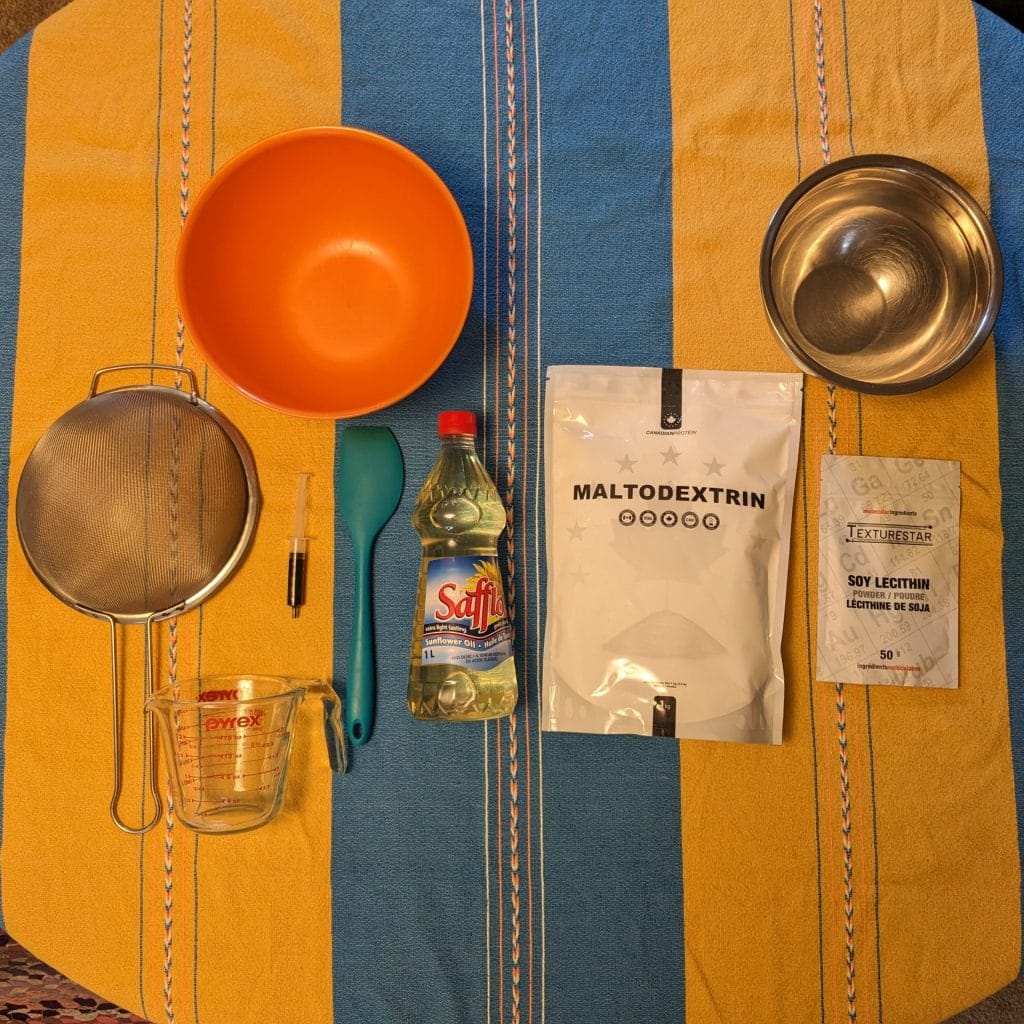
I didn’t have coconut oil so for this batch I used sunflower oil and RSO.

Here we add the high strength RSO oil to the sunflower oil. You can then mix this up with a whisk or fork.

The dry ingredients should get mixed well before adding your oil.

When you add the oil to the maltodextrin it will form a clumpy powder. If you add more maltodextrin you can make it more of a powder.

You can then mix this powder into any beverage you like. It will turn the liquid cloudy.

The powder can also be added to gel capsules and used as a cannabis pill.
Dosing Tips and Warnings
When you’ve got your cannabis powder ready, dosing is the key to a good experience. Figuring out how much THC is in each serving doesn’t need to be a puzzle. Here’s what to do:
Calculate Total THC: Start with the amount of cannabis you used. If your cannabis has 15% THC and you used 5.6 grams (0.2 ounces), you have 840 milligrams of THC in total after decarboxylation (5.6 grams times 15%).
Estimate THC Extraction Efficiency: Assume about a 60% efficiency rate in your extraction process, which is typical for homemade infusions. That means you actually have 504 milligrams of THC available in your oil (60% of 840 milligrams).
Mix with Maltodextrin: After adding your oil to the maltodextrin using a 2:1 ratio of maltodextrin to oil, you’ll mix them together. For weight measurements, add the weight of the oil to twice that amount of maltodextrin (in grams).
Final Weight and THC Content: If, for example, you ended up with a final mixture weight of 100 grams, and you know you have 504 milligrams of THC in total, you divide the THC total by the powder weight. So, 504mg/100g = 5.04mg of THC per gram of powder.
Now, when you want to measure out your THC servings, if you’re looking for a dose of 10 milligrams of THC, you would use just about 2 grams of your cannabis powder (because 2g of powder x 5.04mg/g = 10.08mg THC).
Using RSO: Determining the exact potency here can be a little difficult. Since it is concentrated it will be much stronger than a coconut oil infusion. This means you need to dilute like i did with sunflower oil.
- Start small—you can always add, but you can’t take away. If it’s your first time, you might want to start with even less than 10 milligrams to see how it affects you.
- Now for a heads-up on ingredients: Maltodextrin can have a high glycemic index. That means if you’re watching your blood sugar or have concerns about diabetes, you may want to talk to your healthcare provider.
- As for lecithin, some people can be allergic, particularly to soy-based lecithin. Sunflower lecithin is often a safer choice for those with soy allergies, but always err on the side of caution.
Final Thoughts
So, you’ve got your cannabis powder—now what? This powder can zip into a morning smoothie, blend into baking recipes, or even stir into a pasta sauce. The sky’s the limit!
We’d love to hear how you’re using your cannabis powder. Found a great mix for a morning boost or an ingenious way to craft an evening treat? Send us a message and let us know. Sharing is caring, after all—let’s learn from each other’s cannabis kitchen adventures!
If you want to learn even more about growing good cannabis, we offer a free 40+ page guide full of images.
Now available on Amazon.
Sign up for our newsletter and download the digital copy today!
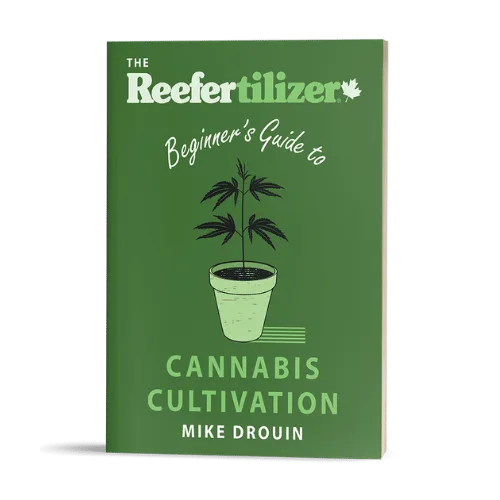
This guide will answer many questions about growing cannabis, like the following...
✔ Selecting Seeds
✔ Identify and Correct Problems
✔ Maximize Yield
✔ Much More...
Get a Chance to INSTANTLY WIN a Reefertilizer Nutrient Kit When You Sign Up.
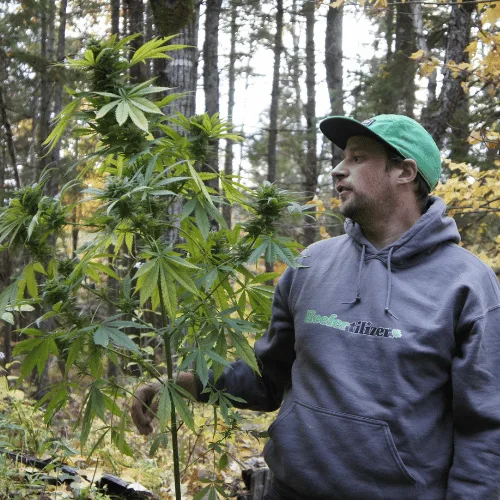
Mike Drouin is the co-founder of Reefertilizer. He’s an experienced craft cannabis grower and a writer of many articles regarding the process. Mike lives on Vancouver Island and enjoys cycling and camping and will sometimes combine the two.
